
Mini Dental Implants: Restore Your Smile with Dr. Jaisika Rajpal Arora at Dental Park
For patients navigating the challenges of missing teeth or unstable prosthetics, traditional bone-grafting procedures can feel daunting. Mini Dental Implants (MDIs) offer a sophisticated, minimally invasive alternative specifically designed for individuals who lack the jawbone density required for standard restorations. By bypassing complex bone augmentations, this advanced therapeutic approach provides immediate structural stability with significantly reduced surgical trauma and healing times.
At Dental Park, our mini dental implant workflows are led by Dr. Jaisika Rajpal Arora, a specialist Periodontist and Implantologist with over 17 years of dedicated clinical expertise in precisely placing and restoring MDIs. Every treatment plan is backed by our advanced diagnostic ecosystem and rigorous patient comfort protocols, ensuring highly predictable outcomes in a supportive, clinically sound environment.
Structural Differences: Mini vs. Traditional Implants
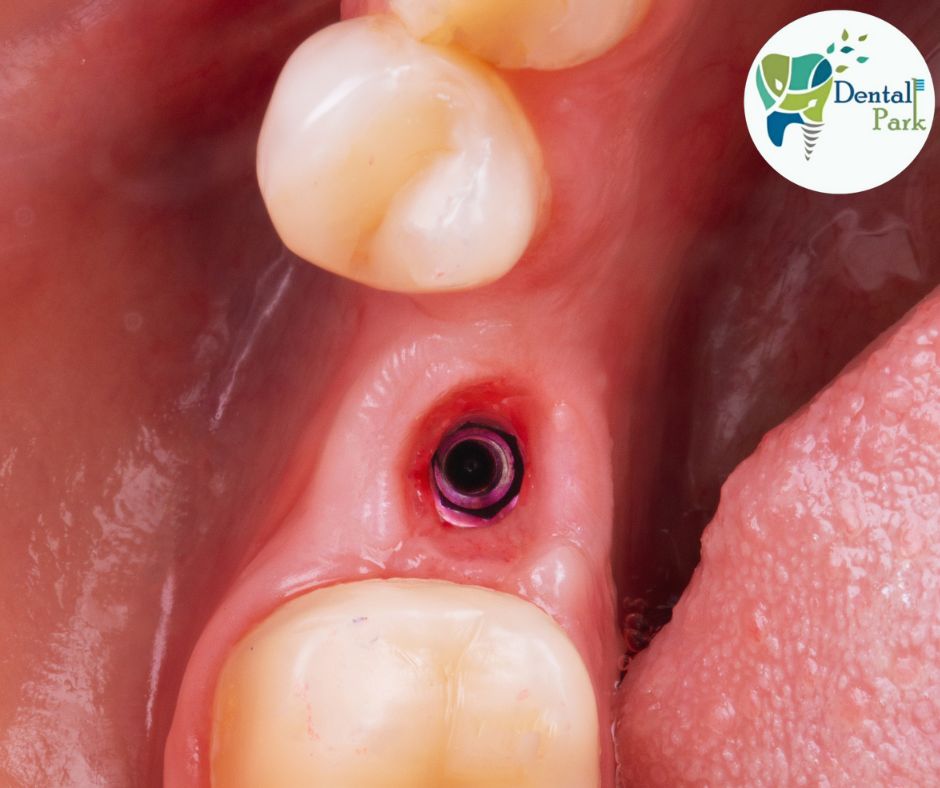
Understanding the biomechanical variances between implant modalities is essential for selecting the correct therapeutic path. Mini dental implants are ultra-slim, single-piece solid titanium fixtures featuring a ball-shaped head that acts as a prosthetic anchor, differing fundamentally from conventional multi-part systems.
| Diagnostic Parameter | Conventional Dental Implants | Mini Dental Implants (MDIs) |
| Diameter & Structure | Typically ranges from $3.2\text{mm}$ to $6.0\text{mm}$; utilizes a two-piece design comprising an independent implant body and a separate architectural abutment. | Ultra-slim design ranging from $1.8\text{mm}$ to $2.9\text{mm}$; engineered as a single, continuous piece of solid biocompatible titanium alloy with an integrated ball head. |
| Bone Requirements | Mandates substantial vertical and horizontal bone volume. Often requires prior surgical intervention, such as autologous bone grafting or sinus lifts. | Minimally demanding; explicitly designed to utilize residual ridge morphology, bypassing the need for complex bone augmentations or extensive graft healing periods. |
| Surgical Load & Workflow | Involves a multi-stage surgical protocol, requiring full flap elevation, extensive suturing, and a multi-month osseointegration period before prosthetic loading. | Completed via a streamlined, flapless micro-incision protocol. Offers immediate stabilization, frequently allowing for the immediate snap-on restoration of the prosthetic. |
By utilizing these narrow-diameter fixtures, Dr. Jaisika Rajpal Arora can deliver stable structural foundations even in compromised ridges that cannot support traditional implants.
The Clinical Workflow at Dental Park
The MDI treatment journey at Dental Park combines strict surgical precision with a highly efficient, single-visit protocol designed to minimize chair time and optimize patient recovery.
Phase 1: Advanced 3D CBCT Diagnostics
Every workflow begins with high-resolution, cross-sectional 3D Cone Beam CT (CBCT) Scanning. This allows for the precise three-dimensional mapping of your jawbone architecture, bone density, and adjacent anatomical landmarks (such as nerves and sinus cavities). Dr. Arora utilizes computer-guided planning software to pre-determine the exact angle, depth, and spatial orientation of each micro-implant before the procedure even begins.
Phase 2: Minimally Invasive Placement
Performed under localized anesthesia, the surgical placement is exceptionally gentle. Rather than reflecting large flaps of gum tissue, Dr. Arora utilizes a specialized micro-pilot channel technique. The ultra-slim titanium posts are threaded directly through the gum tissue and into the bone with precise torque. Because this method minimizes disruption to the surrounding periosteum and blood supply, it eliminates the need for extensive incisional cutting or sutures.
Phase 3: Immediate Prosthetic Snap-On
Once securely seated, the specialized ball-heads of the mini implants sit just above the gum line. Your existing or newly fabricated dentures are precisely retrofitted with medical-grade housing and O-ring retention sockets. The prosthesis is then snapped securely onto the implants, delivering immediate functional stability, eliminating slippage, and allowing you to speak and eat comfortably on the very same day.
Patient Selection: Are You a Candidate for MDIs?
While mini dental implants are highly versatile, proper case selection is paramount to ensuring long-term restorative success.
- Long-Term Denture Wearers: Ideal for individuals struggling with loose or ill-fitting dentures who seek reliable, slip-free retention without the daily need for messy dental adhesives.
- Anatomically Narrow Ridges: Highly indicated for the replacement of smaller teeth, such as lower incisors or premolars, where the underlying bone ridge is too narrow or thin to physically accommodate a standard full-sized implant.
- Medical or Financial Constraints: An excellent choice for individuals who wish to avoid the physiological trauma, extended healing phases, or higher systemic risks associated with extensive bone grafting, as well as those seeking a highly efficient, cost-conscious implant alternative.
Clinical Note on Case Selection
Mini dental implants offer remarkable structural advantages, but they are not a universal substitute for standard implants. A comprehensive clinical and radiographic evaluation is required to ensure that the patient’s biting forces and occluding patterns are mechanically compatible with narrow-diameter fixtures. Dr. Jaisika Rajpal Arora performs a meticulous biomechanical assessment for each patient to guarantee that the selected implant modality is fully capable of withstanding daily masticatory loads over the long term.